



Learn Data Science directly from industry mentors who have solved real business problems at leading companies across finance, healthcare, technology, and retail. In a field as practical and fast-evolving as data science, the difference between a good course and a great one almost always comes down to the quality of mentorship you receive. Industry mentors bring real-world context, practical debugging skills, domain expertise, and career guidance that no textbook, pre-recorded video, or self-paced online course can ever match.
When you learn from someone who has actually built recommendation engines for e-commerce platforms, developed fraud detection models for banks, or created predictive maintenance systems for manufacturing companies, the depth and relevance of your education transforms completely. Structured mentorship does not just teach you concepts — it accelerates your learning curve dramatically, helps you avoid common pitfalls that self-learners struggle with for months, and ensures you graduate truly job-ready with the confidence and skills to succeed in your first data science role.
Why Industry Mentors Matter
The difference between a good data science course and a great one often comes down to who is teaching you and how they teach. Industry mentors bring a perspective that academic instructors and pre-recorded content simply cannot provide. They have spent years working with real data in production environments, dealing with the messiness, ambiguity, and business pressure that characterize actual data science work.
Mentors understand what hiring managers look for because they have been hiring managers themselves or have worked closely with them. They know which skills are actually used daily versus which ones are merely impressive on paper. This insider knowledge shapes your learning in ways that make you genuinely employable rather than just theoretically knowledgeable. Self-paced learners often spend weeks mastering tools or techniques that are rarely used in practice, while mentor-guided learners focus their energy on the 20% of skills that deliver 80% of the value in real data science roles.
What Industry Mentors Offer
The value of industry mentorship extends far beyond just teaching technical concepts. Here is what experienced data science mentors bring to your learning experience:
- Real-World Problem-Solving Context — Mentors have solved actual business problems with data at companies across finance, healthcare, retail, technology, and logistics. They share practical insights about what works in production environments versus academic settings, how to communicate findings to non-technical stakeholders, and how to navigate the organizational dynamics that impact every data science project. This context is impossible to learn from textbooks alone.
- Current Industry Knowledge — They know exactly which tools, frameworks, libraries, and techniques companies are actually using in production today — not what was popular three years ago. This insider knowledge helps you prioritize learning the skills that matter most for landing a job right now, rather than spending precious time on outdated technologies or obscure methods that interviewers will never ask about.
- Personalized Career Guidance — From crafting a compelling resume that highlights the right projects to developing interview strategies tailored to your target companies and building professional networks that open doors, mentors provide deeply personalized advice based on your educational background, strengths, interests, and specific career goals. This one-on-one guidance is worth more than dozens of generic career advice articles.
- Practical Debugging Skills — Learning to troubleshoot messy, real-world datasets is vastly different from working with clean, well-organized textbook examples. Mentors teach you how to handle missing values systematically, identify and deal with corrupted data, detect and manage outliers, and recognize unexpected patterns that you will encounter every single day on the job. These debugging and data wrangling skills often take self-learners years to develop.
- Industry Network Access — Mentors often introduce promising students to their professional networks, recommend exceptional learners for open positions at their companies or partner organizations, and provide professional references that significantly boost your job search success. In many cases, a mentor's referral can fast-track your application past the initial screening that eliminates most candidates.
The Mentored Learning Experience
A mentor-led data science program delivers a fundamentally different learning experience compared to self-paced or lecture-only formats. Here is what a typical program includes and why each component matters:
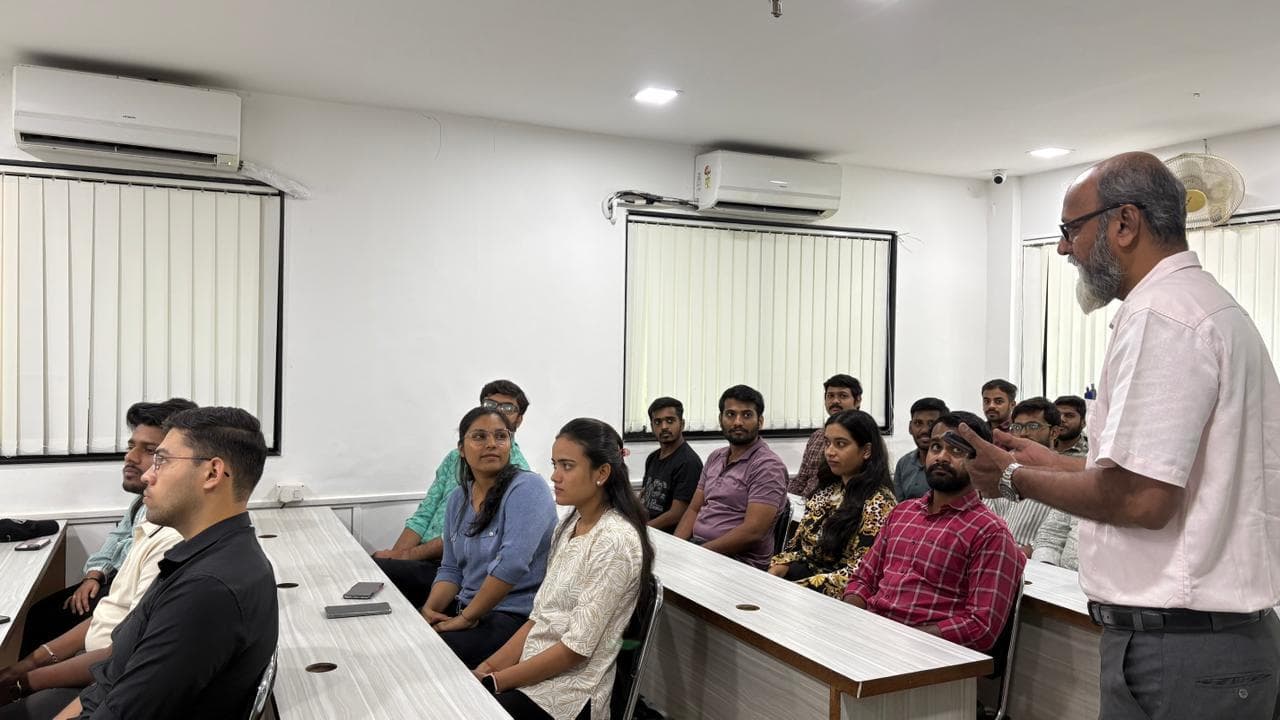
- Live Interactive Sessions — Attend real-time classes where you can ask questions immediately, participate in discussions, work through problems together, and get instant clarification on complex topics. The live interaction creates deeper understanding and better retention compared to passively watching pre-recorded videos, and the classroom dynamic keeps you motivated and accountable.
- Detailed Code Reviews — Mentors review your code line by line, suggesting improvements in efficiency, readability, documentation, and industry best practices. This iterative feedback loop rapidly improves your coding quality to professional standards — something that is nearly impossible to achieve on your own because you cannot see your own blind spots.
- Guided Project Development — Receive expert direction on your capstone and portfolio projects, from problem definition and data collection strategy to feature engineering, model selection, evaluation, and professional presentation. Mentor guidance ensures your projects meet industry quality standards and effectively demonstrate your capabilities to potential employers.
- Intensive Interview Preparation — Participate in realistic mock interviews that simulate actual data science interview rounds, including Python coding challenges, SQL queries, statistics questions, machine learning case studies, business scenario discussions, and behavioral assessments. Get detailed, actionable feedback on exactly what to improve for each type of interview round.
- Dedicated Doubt Resolution — Access scheduled doubt-clearing sessions and one-on-one time with mentors specifically for clearing difficult concepts, solving complex problems, and getting unstuck on challenging assignments. Having someone available to help when you are stuck prevents the frustration and wasted time that often causes self-learners to give up.
Skills You Develop Under Mentorship
Under the guidance of experienced mentors, you develop both the technical skills and the professional judgment needed to succeed as a data scientist:
- Python programming with pandas for data manipulation, numpy for numerical computing, and scikit-learn for machine learning — the three most essential libraries in any data scientist's toolkit
- Statistical analysis including hypothesis testing, A/B testing, probability distributions, and regression analysis — the mathematical foundation that separates data scientists from mere tool users
- Machine learning model building, evaluation, hyperparameter tuning, and understanding when and why to choose one algorithm over another for different business problems
- Data visualization and storytelling with Matplotlib, Seaborn, and Tableau — because insights that cannot be communicated effectively are insights that never drive action
- Deep learning fundamentals with TensorFlow or PyTorch for neural networks, including practical applications in image recognition, natural language processing, and time-series forecasting
Making the Most of Mentorship
Come prepared with questions before every session, share your project progress regularly even when it feels incomplete, and actively participate in code reviews and group discussions. The more you engage with your mentors and peers, the more you will gain from the experience. Do not hesitate to ask seemingly basic questions — mentors consistently say that the best students are the ones who ask the most questions, not the ones who sit silently trying to figure everything out on their own.
Frequently Asked Questions
Who are the industry mentors?
Industry mentors are experienced data science professionals with 5-15 years of hands-on experience working at leading companies in India and globally. They have practical experience solving real business problems with data, building production-grade models, and leading data science teams. They stay current with the latest tools, techniques, and industry trends to ensure their teaching remains relevant.
How is mentor-led training different from self-paced courses?
Self-paced courses offer flexibility but lack personalized feedback, real-time interaction, accountability, and career guidance. Mentor-led training provides structured learning paths, immediate doubt resolution during live sessions, detailed code reviews that improve your skills rapidly, and personalized career advice that self-paced courses simply cannot offer. Studies show that mentor-led learners complete programs at 3-4x higher rates than self-paced learners.
Can I interact with mentors outside of class hours?
Yes. Most programs provide dedicated communication channels like Slack or Discord where you can reach out to mentors for quick questions, project guidance, and career advice between scheduled sessions. Many mentors also offer office hours for deeper discussions and one-on-one support.
What if I fall behind in the course?
Mentors actively track individual progress and proactively reach out to learners who are falling behind before the gap becomes too large. Additional one-on-one catch-up sessions, recorded lectures for revision, and supplementary practice materials are provided to help you get back on track without feeling overwhelmed.
How does mentorship help with job placement?
Mentors provide comprehensive placement support including resume reviews, LinkedIn profile optimization, mock interviews across all round types, portfolio feedback, and industry referrals. Many learners get job leads directly through their mentor's professional network, giving them access to unadvertised opportunities and internal referrals that significantly improve their chances of getting hired at desirable companies.